


Keeping Runners Healthy - An Evidence-Based Companion Guide to the IC-SAPTA 2026 Keynote Presentation

Welcome to the evidence-based guide to partner with my Keynote Presentation at IC-SAPTA 2026 in Surakarta, Indonesia. I was honoured to be approached to present at this international sports medicine conference, particularly around the topic of my personal, professional and research interest, endurance runners. The presentation was titled "Keeping Runners Healthy: Integrating Science, Practice and Performance". I am proud of the depth of running related evidence included in the presentation, along with my own clinical expertise. The following guide provides an overview of the keynote speech, and provides access to the resources, recommended readings, and additional information for both IC-SAPTA 2026 attendees, and other clinicians/coaches interested in working with endurance runners.
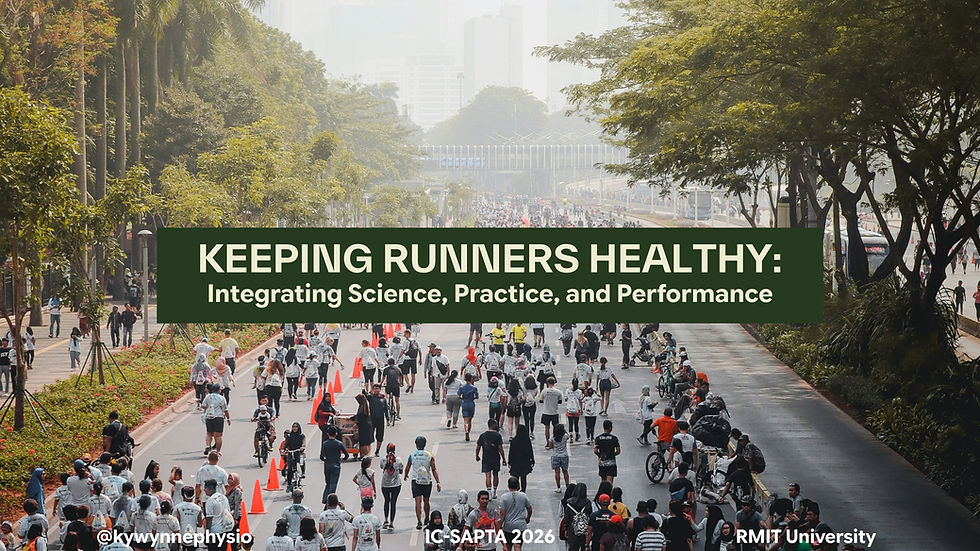
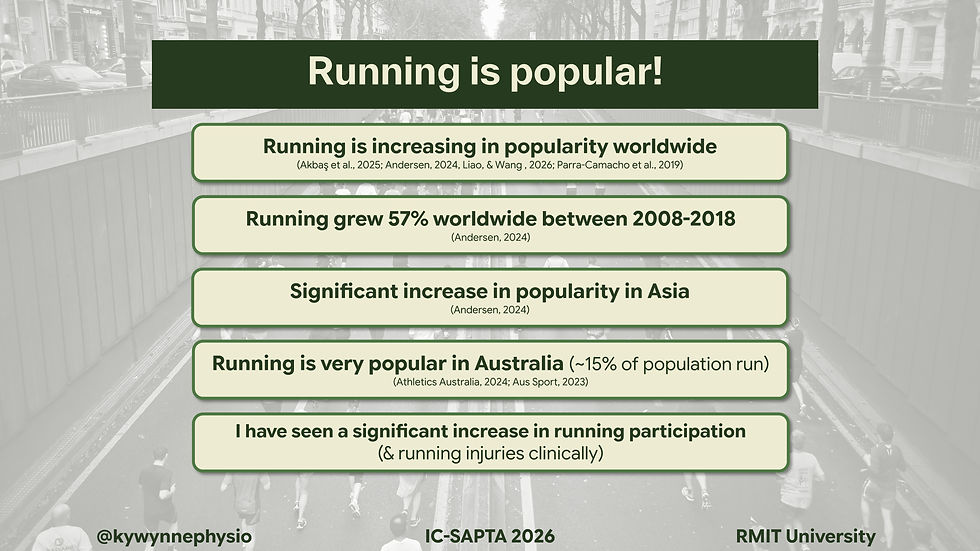
Along with attendees of IC-SAPTA 2026, this article holds great relevance due to the popularity of running worldwide. Studies show a significant increase in running participation, growing by 57% between 2008-2018 (Andersen, 2024). There has been significant growth in Asia, and in Australia where I work, running represents one of the most popular sports (15% of the population in Australia run!) (Athletics Australia, 2024, Aus Sport, 2023). The figure below details some of the statistics behind running's popularity.
Who is Ky Wynne?
I am a Melbourne-based running physiotherapist, exercise scientist, educator, speaker and researcher, with more information about me found here.
In 2026 I co-founded Athlete's Edge Physiotherapy, a performance physiotherapy clinic focused on endurance runners, data driven decisions, high quality long term rehabilitation (e.g. ACL injuries), patient education and clinically applicable research.
Over the past few years, I have completed numerous media and speaking arrangements, on a variety of platforms (including mainstream Australian media, podcasts, university, public forums, conference presentations etc). Additionally, I have also published running related research and am involved physiotherapy advocacy, with recent research and projects found here.
Those looking to stay up to date, or access free running related content, should check out my social media channel @kywynnephysio.

Understanding the Demands of Running
Running as a sport involves high external forces (e.g. GRF), high internal forces (often measured using peak muscle force relative to bodyweight), and fast ground contact times (often <0.300 sec per step). The figure below (see fig-2.) details some of the high internal force / muscle force demands on the body during running. In particular, note the significance of the calf muscles (particularly soleus) at all speeds of running (up to 10 x BW when sprinting!).
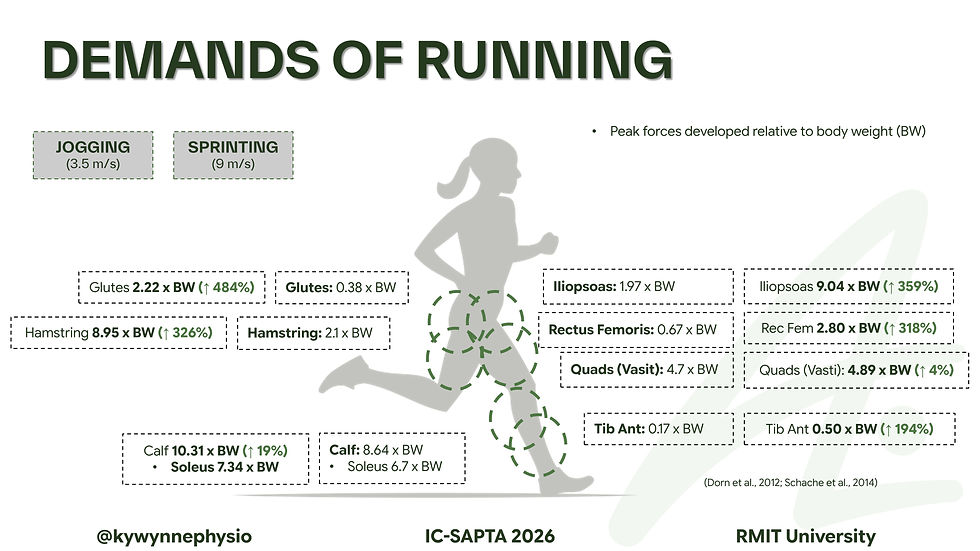
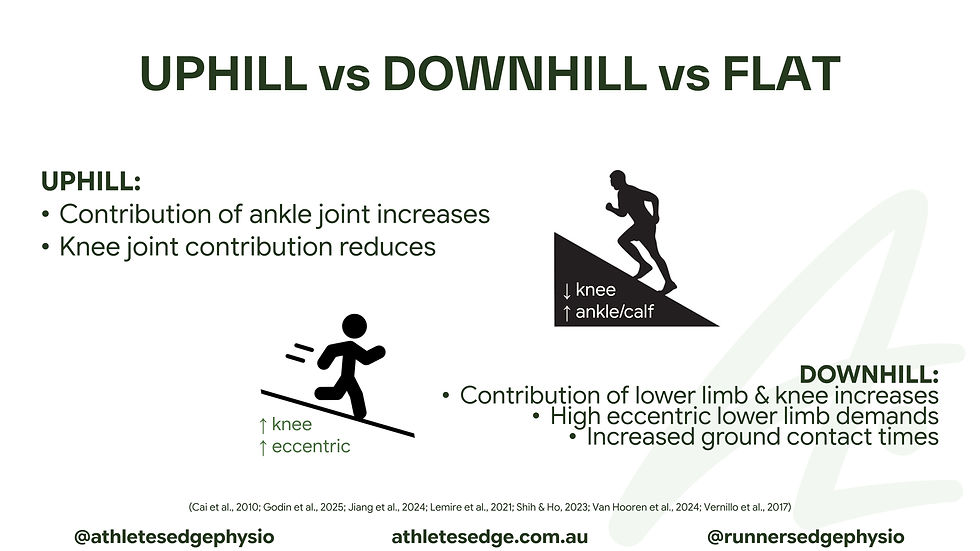
As detailed in Figure 2 and numerous running biomechanical studies, the calf and ankle provide the greatest contribution to running regardless of speed. (Schache et al., 2019; Williams et al., 2017). While modest at slow speeds/steady state running (e.g. jogging), the hip contribution is significantly higher during acceleration and sprinting (Schache et al., 2015; Williams et al., 2017). We also see different demands on the body during uphill / downhill running, as demonstrated in figure 3 below.
This represents a very 'surface level' overview on running demands, and I invite you to read more of the recommended readings and references at the end of this article.
Running Related Injuries - Overview & Risk Factors
Statistically, running injuries are very common. This is something I observe working clinically with the endurance running population, where many runners will either have a current injury, or a history of running injuries. Some studies show a yearly incidence rate of up 91%, with a commonly reported range around 40-79%, indicating how common injuries are in this population group (Becker, 2013; Burke et al., 2023; Desai et al., 2021; Dillon et al., 2023; Francis et al., 2018; Fredette et al., 2022; Fredericson & Misra, 2007; Goss & Gross, 2012; Hafer et al., 2016; Hegedus et al., 2021; Kakouris et al., 2021; Kemler et al., 2018; Napier et al., 2018; Raghunandan et al., 2021; Richards et al., 2009; Sleeswijk Visser et al., 2021; Stenerson et al., 2023; Taunton et al., 2002; van Gent et al., 2007; Videbæk et al., 2015; Willy & Davis, 2013; Van Middelkoop et al., 2008a; van Poppel et al., 2021).
Unfortunately running injuries aren't always managed well. A study by Sleeswijk Visser (2021) determined only 39% of injured runners visited a healthcare professional (Sleeswijk Visser et al., 2021), and many runners continue to run through their running injuries (Linton & Valentin, 2018). Additionally, running injuries have a high recurrence rate (Bramah et al., 2021; Messier et al., 2018; Raghunandan et al., 2021; Tenforde et al., 2013), with studies showing 56-80% of injuries are often secondary/re-injury (Messier et al., 2018; Raghunandan et al., 2021).
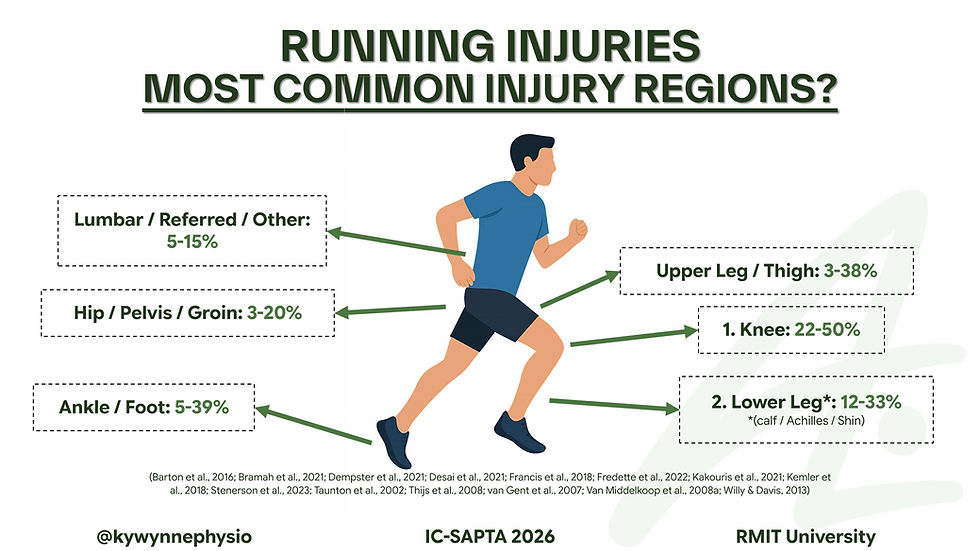
Common running injury regions are detailed below (knee is consistently the most common) (figure-4). We also see differences in running injuries and data between males and females (figure-5).

Predicting running related injuries is typically complex, due to the multifactorial nature of injuries in general. However, there are a plethora of studies which investigate risk factors and associated factors. I have spent significant time reading 100s, if not 1000s of running related research articles over the past few years as part of my clinical and research roles. The figure below (fig-6.) details some of the many evidence based factors associated with running related injuries. I have broken these factors into "modifiable" and "non-modifiable", and "intrinsic" and "extrinsic". It is important to note, that while this figure is extensive, there are likely additional factors which may be missing, potentially due to the poor evidence based behind their association or causation of running injury.

Keeping Runners Healthy: Preventing Injury?
Can we prevent injuries in runners? Statistically, the evidence doesn't seem to think so. And clinically, I believe we should be considering the term "risk mitigation" rather than "injury prevention". Additionally, my ethos around runners and injuries is to be "proactive rather than reactive" with niggles/pain, and to consider early assessment and intervention for running pain to prevent the injury reaching a point where the runner has to consider taking time off/stop running. Injury is the most common reason for runners to be missing sessions and for discontinuing training (Stevinson et al., 2022). As a running physio this is something I am keen to avoid. Significantly, reducing the time being unable to run due to injury leads to greater training participation. This higher participation has been shown to be a factor linked with a greater chance of athletic success (Drew et al., 2017). Therefore, injury risk mitigation should be considered a priority for those looking to maximise athletic performance and successful outcomes.
The following 4 categories (fig-7.) were discussed in my IC-SAPTA presentation, balancing the evidence base with clinical "case examples" to illustrate the link between injury risk and performance. I have provided numerous resources at the end of the article for those motivated clinicians and coaches who wish to further upskill in the area of endurance running.

Considering Sleep & Injury Risk:
Sleep is a critical factor in recovery, performance and overall well-being and longevity. For endurance runners, experts and studies report it as very important (figure-8). Clincially, when working with runners, it is one of the factors I consider most important to monitor, something I referenced in a recent podcast episode (The Run Diaries EP.3). The recommendation is for adults obtain at least 8 hours of sleep per night (Gao et al., 2019; Halson, 2014; Johnston et al., 2020; Roberts et al., 2019), with the impact of poor sleep evident on running performance, and injury risk. Significantly, one study shows runners with poor or irregular sleep are 1.78 x more likely to report injuries (than good sleepers), a fact that shouldn't be ignored (de Jonge & Taris, 2025). During the IC-SAPTA presentation I detailed further studies and information around the impact of poor sleep on endurance runners, hopefully illustrating the importance of focusing on sleep in this population group.
Coaches and health professionals should consider how they monitor sleep with their athletes/runners. There are a variety of methods available, some of which I list below (and in the resource list). I use a variety of methods clinically, including Lumin Sports for Wellness monitoring, subjective scoring, validated questionnaires for research (e.g. Promis Sleep Score) and wearable technology. Modern technological options make this evaluation much easier for athletes and coaches (e.g. Oura ring, garmin/smart watch etc).
Considering Running Load & Injury Risk:
Running load changes, commonly referred to as "load spikes", are one of the many factors linked with injury risk. Clinically, load plays a significant role in the majority of injuries I see with runners, whether they be overloaded, or underloaded. Overall, "load is good", and the aim should be to increase the load the runner can tolerate over time (see Gabbett et al., 2020 and related work), however the problem is often how the runner gets there and what capacity they have to tolerate this load. Usually, rapid changes, big jumps, or returning to the same level after periods of time off, all make a runner vulnerable to increased injury risk. In particular, there are numerous studies which reference load changes and increased injury risk (Damsted et al., 2018; Damsted et al., 2019; Dijkhus et al., 2019; Frandsen et al., 2025; García-Pinillos et al., 2017; Nielsen et al., 2014).
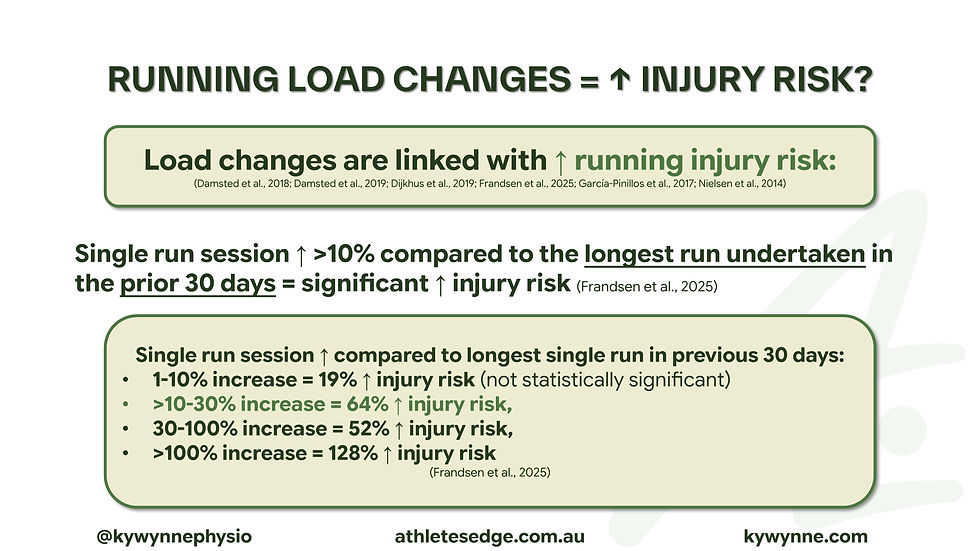
One particular study by Frandsen and colleagues (2025) has been very popular online, and was referenced during my IC-SAPTA Keynote presentation. This study looked into injury risk related to long run distance over a month, and in particular, the change in long run distance relative to the previous longest run in the last 30 days. As detailed in the figure below (fig-9), load increases of >10% for the long run, compared to the previous 30 day long runs, increased injury risk by 64% (Frandsen et al., 2025). This study used adult runners over an 18 month period, using wearable data, and measuring workloads to determine injury risk.
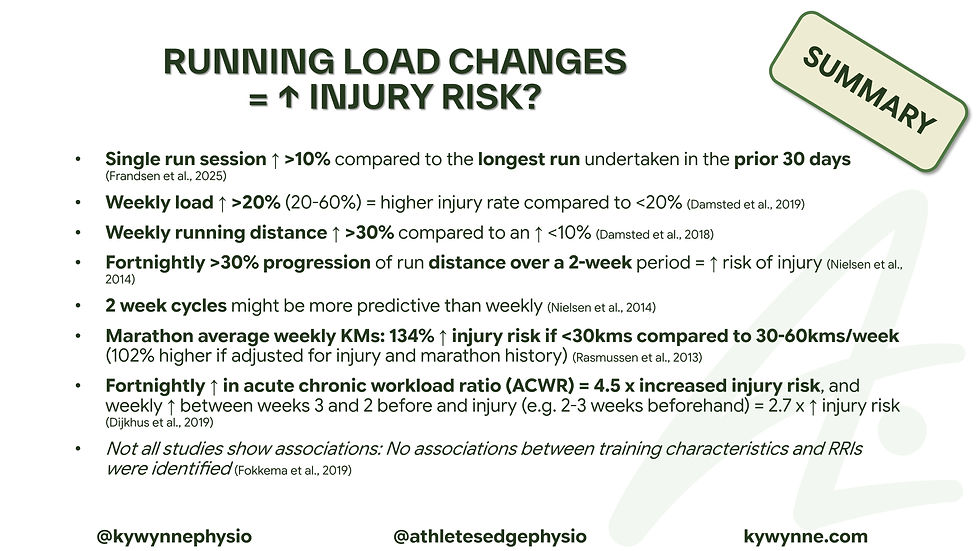
I promised during my IC-SAPTA presentation to detail further running load data in this guide, and the following figure (fig-10) details some of the many studies looking at training load and injury risk in endurance runners. This is particularly relevant for coaches, health professionals and dedicated runners to keep an eye on to help mitigate injury risk.
For those interested in understanding training load in greater detail, I point you towards the detailed, free article I have written on the Athlete's Edge website around training load, found here. This article helps to break down what training load is, how to understand and manage it better. It is an excellent guide for athletes and coaches/health professionals.
Considering Running Technique & Injury Risk:
Running biomechanics / technique and injury risk is a very big topic, and a sometimes controversial one in articles and online. There are a variety of contrasting viewpoints, with some people advocating that "technique variations are normal and modification isn't needed" and others advocating for "modifiying any gait "faults" or asymmetries". Clinically, I sit somewhere in the middle. My view is based upon a significant body of literature, something I have broken down in a recent Runner's Edge Webinar (see resources at the end) for those interested. There are numerous studies in the literature which break down the variety of factors linked with injury risks for runners (both associations and causations). The evidence often finds it difficult to point to "1 factor causing running injury" due to the complexity of running injuries, and studies don't yet quantify the % of injury risk for having "one particular biomechanical "fault" compared to not having it". However, as a running physio, I strong believe in running biomechanical assessment, and encourage clinicians and coaches to work on their gait assessment and retraining skills. The studies below (see figures 11-16) are a good starting point, along with my webinar, for motivated clinicians.
Considering Strength Training & Injury Risk:
Strength training is one of the most important additions to any runner's toolkit (my opinion), but the evidence also supports the benefits of strength training for endurance runners. Typically, when surveyed, many runners report including strength training in their routines, perceiving it to be a key component of their training (García-Pinillos et al., 2020; Santos et al., 2024). However, despite runners understanding the importance, over 60% of runners don't include regular strength training in their routines (Blagrove et al., 2020; García-Pinillos et al., 2020; Santos et al., 2024).
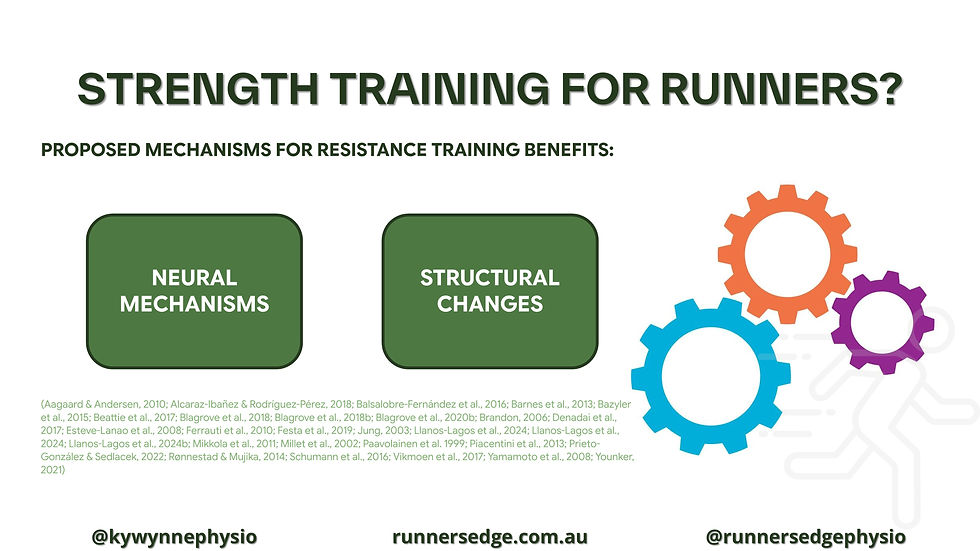
There is significant evidence to demonstrate that the benefits occur due to neural and structural changes (fig-17).
As discussed during the Keynote Presentation, recent studies demonstrate promising results for strength training and injury prevention (up to 85% less risk compared to controls), particularly if well-designed and well-adhered to programs (e.g. program from a running physio that is regularly updated/supervised and assessed/re-assessed) (Desai et al., 2023; Leppänen et al., 2024; Naderi et al., 2026). Stay tuned for my upcoming article in the Strength and Conditioning Journal which breaks down in significant detail the mechanisms, benefits and prescription of strength training for endurance runners.
Summary
My goal from the IC-SAPTA 2026 Keynote presentation (and this article) was to illuminate the importance of considered, holistic management of endurance runners. In particular, being "proactive" with the management of runners (e.g. strength screenings, injury prevention, management treatment, regular check ups, load management, addressing factors like described in this article, strength training etc) should be advocated for strongly over reactive management (e.g. dealing with an injury). Clinicians and coaches have a role to play with educating runners on the importance of proactive management and the benefits on injury risk mitigation and performance.
Resources & Recommendations
Recommended Guides & Articles:
Understanding Training Load: How to manage it for optimum training outcomes [Athlete's Edge Physiotherapy]
Improve your running based on science [Part 1] [Athlete's Edge Physiotherapy]
Improve your running based on science [Part 2] [Athlete's Edge Physiotherapy]
Nutritional Considerations for Injury Recovery [kywynne.com]
Recommended Courses, Webinars & Podcasts:
Recommended Research Articles: *in no particular order
Dorn, T. W., Schache, A. G., & Pandy, M. G. (2012). Muscular strategy shift in human running: dependence of running speed on hip and ankle muscle performance. Journal of Experimental Biology, 215(11), 1944-1956.
Hongwei, Y., & Resza, A. M. (2021). Running motivations of non-elite long-distance runners in Indonesia. Journal of Physical Education and Sport, 21, 2288-2294.
Wynne, K. (2026). Understanding and Prescribing Plyometrics for Endurance Runners: A Review. Strength & Conditioning Journal, 10-1519.
Barton, C. J., Bonanno, D. R., Carr, J., Neal, B. S., Malliaras, P., Franklyn-Miller, A., & Menz, H. B. (2016). Running retraining to treat lower limb injuries: a mixed-methods study of current evidence synthesised with expert opinion. British journal of sports medicine, 50(9), 513-526.
Soligard, T., Schwellnus, M., Alonso, J. M., Bahr, R., Clarsen, B., Dijkstra, H. P., ... & Engebretsen, L. (2016). How much is too much?(Part 1) International Olympic Committee consensus statement on load in sport and risk of injury. British journal of sports medicine, 50(17), 1030-1041.
Ceyssens, L., Vanelderen, R., Barton, C., Malliaras, P., & Dingenen, B. (2019). Biomechanical risk factors associated with running-related injuries: a systematic review. Sports medicine, 49, 1095-1115.
Schwellnus, M., Soligard, T., Alonso, J. M., Bahr, R., Clarsen, B., Dijkstra, H. P., ... & Engebretsen, L. (2016). How much is too much?(Part 2) International Olympic Committee consensus statement on load in sport and risk of illness. British journal of sports medicine, 50(17), 1043-1052.
Anderson, J. J. (2024). State of Running 2019. Retrieved from https://runrepeat.com/state-of-running.
Correia, C. K., Machado, J. M., Dominski, F. H., de Castro, M. P., de Brito Fontana, H., & Ruschel, C. (2024). Risk factors for running-related injuries: An umbrella systematic review. Journal of sport and health science, 13(6), 793-804.
Schuster Brandt Frandsen, J., Hulme, A., Parner, E. T., Møller, M., Lindman, I., Abrahamson, J., ... & Nielsen, R. O. (2025). How much running is too much? Identifying high-risk running sessions in a 5200-person cohort study. British Journal of Sports Medicine, 59(17), 1203-1210.
Gabbett, T. J. (2016). The training—injury prevention paradox: should athletes be training smarter and harder?. British journal of sports medicine, 50(5), 273-280.
Gabbett, T. J. (2020). How much? How fast? How soon? Three simple concepts for progressing training loads to minimize injury risk and enhance performance. Journal of orthopaedic & sports physical therapy, 50(10), 570-573.
Alentorn-Geli, E., Samuelsson, K., Musahl, V., Green, C. L., Bhandari, M., & Karlsson, J. (2017). The association of recreational and competitive running with hip and knee osteoarthritis: a systematic review and meta-analysis. Journal of Orthopaedic & Sports Physical Therapy, 47(6), 373-390.
Lee, D. C., Brellenthin, A. G., Thompson, P. D., Sui, X., Lee, I. M., & Lavie, C. J. (2017). Running as a key lifestyle medicine for longevity. Progress in cardiovascular diseases, 60(1), 45-55.
Blagrove, R. C., Howatson, G., & Hayes, P. R. (2018). Effects of strength training on the physiological determinants of middle-and long-distance running performance: a systematic review. Sports Medicine, 48, 1117-1149.
Goldberg, M., Le Mat, Y., Metra, M., De Sousa, T., Edouard, P., Millet, G. Y., ... & Debarnot, U. (2025). Poor Sleep Quality Is Associated With an Increased Risk of Running‐Related Injuries: A Prospective Study of 339 Runners Over Six Months. Scandinavian Journal of Medicine & Science in Sports, 35(11), e70164.
Blanch, P., & Gabbett, T. J. (2016). Has the athlete trained enough to return to play safely? The acute: chronic workload ratio permits clinicians to quantify a player's risk of subsequent injury. Br J Sports Med, 50(8), 471-475.
Leppänen, M., Viiala, J., Kaikkonen, P., Tokola, K., Vasankari, T., Nigg, B. M., ... & Pasanen, K. (2024). Hip and core exercise programme prevents running-related overuse injuries in adult novice recreational runners: a three-arm randomised controlled trial (Run RCT). British Journal of Sports Medicine, 58(13), 722-732.
de Jonge, J., & Taris, T. W. (2025). Sleep Matters: Profiling Sleep Patterns to Predict Sports Injuries in Recreational Runners. Applied Sciences, 15(19), 10814.
Recommended Tools, Websites and Others:
References & Citations
*from the article and from the Keynote IC-SAPTA 2026 Presentation
References for the keynote presentation and guide above
Aderem, J., & Louw, Q. A. (2015). Biomechanical risk factors associated with iliotibial band syndrome in runners: a systematic review. BMC musculoskeletal disorders, 16(1), 1-16.
Adrian, G. (2025). Turning Running into a Lifestyle. Retrieved from https://www.ums.ac.id/en/news/global-pulse/turning-running-into-a-lifestyle.
Agresta, C., & Brown, A. (2015). Gait retraining for injured and healthy runners using augmented feedback: a systematic literature review. journal of orthopaedic & sports physical therapy, 45(8), 576-584.
Akbaş, A., Żebrowska, A., Malchrowicz-Mośko, E., Stempień, J., Bezuglov, E., Górka-Chowaniec, A., & Waśkiewicz, Z. (2025). Socioeconomic status and motivation in endurance sports: insights from long-distance running. Frontiers in Psychology, 16, 1527661.
Alentorn-Geli, E., Samuelsson, K., Musahl, V., Green, C. L., Bhandari, M., & Karlsson, J. (2017). The association of recreational and competitive running with hip and knee osteoarthritis: a systematic review and meta-analysis. Journal of Orthopaedic & Sports Physical Therapy, 47(6), 373-390.
Alexander, J. L., Culvenor, A. G., Johnston, R. R., Ezzat, A. M., & Barton, C. J. (2022). Strategies to prevent and manage running-related knee injuries: a systematic review of randomised controlled trials. British Journal of Sports Medicine, 56(22), 1307-1319.
Anderson, J. J. (2024). State of Running 2019. Retrieved from https://runrepeat.com/state-of-running.
Anderson, L. M., Bonanno, D. R., Hart, H. F., & Barton, C. J. (2020). What are the benefits and risks associated with changing foot strike pattern during running? A systematic review and meta-analysis of injury, running economy, and biomechanics. Sports Medicine, 50, 885-917.
Athletics Australia, (2024). Running Event Participation in Australia Leading the Pack. Retrieved from https://www.athletics.com.au/news/running-event-participation-in-australia-leading-the-pack/.
Aus Sport, (2023). Aus Play Report 2022-2023. Retrieved from https://www.ausport.gov.au/clearinghouse/research/ausplay/2015-2023.
Azboy, O., & Kaygisiz, Z. (2009). Effects of sleep deprivation on cardiorespiratory functions of the runners and volleyball players during rest and exercise. Acta Physiologica Hungarica, 96(1), 29-36.
Baldwin, K. M., Badenhorst, C. E., Cripps, A. J., Landers, G. J., Merrells, R. J., Bulsara, M. K., & Hoyne, G. F. (2022). Strength training for long-distance triathletes: Theory to practice. Strength & Conditioning Journal, 44(1), 1-14.
Balsalobre-Fernández, C., Santos-Concejero, J., & Grivas, G. V. (2016). Effects of strength training on running economy in highly trained runners: a systematic review with meta-analysis of controlled trials. Journal of strength and conditioning research, 30(8), 2361-2368.
Barnes, K. R., & Kilding, A. E. (2015). Strategies to improve running economy. Sports medicine, 45(1), 37-56.
Barnes, K. R., & Kilding, A. E. (2015b). Running economy: measurement, norms, and determining factors. Sports medicine-open, 1, 1-15.
Barnes, K. R., Hopkins, W. G., Mcguigan, M. R., Northuis, M. E., & Kilding, A. E. (2013). Effects of resistance training on running economy and cross-country performance.
Barrie, B. (2020). Concurrent resistance training enhances performance in competitive distance runners: a review and programming implementation. Strength & Conditioning Journal, 42(1), 97-106.
Barton et al., (2016). Running retraining to treat lower limb injuries: a mixed-methods study of current evidence synthesised with expert opinion. British journal of sports medicine, 50(9), 513-526.
Bazett-Jones, D. M., Neal, B. S., Legg, C., Hart, H. F., Collins, N. J., & Barton, C. J. (2023). Kinematic and kinetic gait characteristics in people with patellofemoral pain: a systematic review and meta-analysis. Sports Medicine, 53(2), 519-547.
Becker, J., James, S., Wayner, R., Osternig, L., & Chou, L. S. (2017). Biomechanical factors associated with Achilles tendinopathy and medial tibial stress syndrome in runners. The American journal of sports medicine, 45(11), 2614-2621.
Blagrove, R. C., Howatson, G., & Hayes, P. R. (2018). Effects of strength training on the physiological determinants of middle-and long-distance running performance: a systematic review. Sports Medicine, 48, 1117-1149.
Blanch, P., & Gabbett, T. J. (2016). Has the athlete trained enough to return to play safely? The acute: chronic workload ratio permits clinicians to quantify a player's risk of subsequent injury. Br J Sports Med, 50(8), 471-475.
Bosquet, L., Montpetit, J., Arvisais, D., & Mujika, I. (2007). Effects of tapering on performance: a meta-analysis. Medicine & Science in Sports & Exercise, 39(8), 1358-1365.
Bramah, C., Preece, S. J., Gill, N., & Herrington, L. (2018). Is there a pathological gait associated with common soft tissue running injuries?. The American journal of sports medicine, 46(12), 3023-3031.
Bredeweg, S. W., Kluitenberg, B., Bessem, B., & Buist, I. (2013). Differences in kinetic variables between injured and noninjured novice runners: a prospective cohort study. Journal of Science and Medicine in Sport, 16(3), 205-210.
Brindle, R. A., Taylor, J. B., Rajek, C., Weisbrod, A., & Ford, K. R. (2019). Association Between Temporal Spatial Parameters and Overuse Injury History in Runners: A Systematic Review and Meta-analysis. Sports Medicine, 1-12.
Burfield, M., Sayers, M., & Buhmann, R. (2023). The association between running volume and knee osteoarthritis prevalence: a systematic review and meta-analysis. Physical Therapy in Sport, 61, 1-10.
Burke, A., Dillon, S., O’Connor, S., Whyte, E. F., Gore, S., & Moran, K. A. (2023). Aetiological factors of running-related injuries: A 12 month prospective “running injury surveillance centre”(RISC) study. Sports Medicine-Open, 9(1), 46.
Casado, A., Hanley, B., Santos-Concejero, J., & Ruiz-Pérez, L. M. (2021). World-class long-distance running performances are best predicted by volume of easy runs and deliberate practice of short-interval and tempo runs. The Journal of Strength & Conditioning Research, 35(9), 2525-2531.
Casado, A., González-Mohíno, F., González-Ravé, J. M., & Foster, C. (2022). Training periodization, methods, intensity distribution, and volume in highly trained and elite distance runners: a systematic review. International journal of sports physiology and performance, 17(6), 820-833.
Ceyssens, L., Vanelderen, R., Barton, C., Malliaras, P., & Dingenen, B. (2019). Biomechanical risk factors associated with running-related injuries: a systematic review. Sports medicine, 49, 1095-1115.
Charest, J., & Grandner, M. A. (2020). Sleep and athletic performance: impacts on physical performance, mental performance, injury risk and recovery, and mental health. Sleep medicine clinics, 15(1), 41-57.
Chennaoui, M., Arnal, P. J., Sauvet, F., & Léger, D. (2015). Sleep and exercise: a reciprocal issue?. Sleep Medicine Reviews, 20, 59-72.
Chiang, T. L., Chen, C., Lin, Y. C., Chan, S. H., & Wu, H. J. (2023). Effect of polarized training on cardiorespiratory fitness of untrained healthy young adults: a randomized control trial with equal training impulse. Journal of Sports Science & Medicine, 22(2), 263.
Child, R. B., Wilkinson, D. M., & Fallowfield, J. L. (2000). Effects of a training taper on tissue damage indices, serum antioxidant capacity and half-marathon running performance. International journal of sports medicine, 21(05), 325-331.
Clark, A. W., Goedeke, M. K., Cunningham, S. R., Rockwell, D. E., Lehecka, B. J., Manske, R. C., & Smith, B. S. (2017). Effects of pelvic and core strength training on high school cross-country race times. The Journal of Strength & Conditioning Research, 31(8), 2289-2295.
Clark, K. P., Ryan, L. J., & Weyand, P. G. (2017b). A general relationship links gait mechanics and running ground reaction forces. Journal of Experimental Biology, 220(2), 247-258.
Correia, C. K., Machado, J. M., Dominski, F. H., de Castro, M. P., de Brito Fontana, H., & Ruschel, C. (2024). Risk factors for running-related injuries: An umbrella systematic review. Journal of sport and health science, 13(6), 793-804.
Dallam, G. M., Wilber, R. L., Jadelis, K., Fletcher, G., & Romanov, N. (2005). Effect of a global alteration of running technique on kinematics and economy. Journal of sports sciences, 23(7), 757-764.
Damrongthai, C., Kuwamizu, R., Suwabe, K., Ochi, G., Yamazaki, Y., Fukuie, T., ... & Soya, H. (2021). Benefit of human moderate running boosting mood and executive function coinciding with bilateral prefrontal activation. Scientific reports, 11(1), 22657.
Damsted, C., Glad, S., Nielsen, R. O., Sørensen, H., & Malisoux, L. (2018). Is there evidence for an association between changes in training load and running-related injuries? A systematic review. International journal of sports physical therapy, 13(6), 931.
Damsted, C., Parner, E. T., Sørensen, H., Malisoux, L., Hulme, A., & Nielsen, R. Ø. (2019). The association between changes in Weekly running distance and Running–Related injury: preparing for a half marathon. Journal of Orthopaedic & Sports Physical Therapy, 49(4), 230-238.
Dantas, J. L., Doria, C., Rossi, H., Rosa, G., Pietrangelo, T., Fanò-Illic, G., & Nakamura, F. Y. (2015). Determination of blood lactate training zone boundaries with rating of perceived exertion in runners. The Journal of Strength & Conditioning Research, 29(2), 315-320.
Davis, I. (2017). Optimising the efficacy of gait retraining. British Journal of Sports Medicine, 52(10), 624–625.
Davis, I. S., & Futrell, E. (2016). Gait retraining: altering the fingerprint of gait. Physical Medicine and Rehabilitation Clinics, 27(1), 339-355.
de Jonge, J., & Taris, T. W. (2025). Sleep Matters: Profiling Sleep Patterns to Predict Sports Injuries in Recreational Runners. Applied Sciences, 15(19), 10814.
de Souza Júnior, J. R., Rabelo, P. H. R., Lemos, T. V., Esculier, J. F., Barbosa, G. M. P., & Matheus, J. P. C. (2024). Effects of two gait retraining programs on pain, function, and lower limb kinematics in runners with patellofemoral pain: A randomized controlled trial. Plos one, 19(1), e0295645.
Delfina, P. (2025). From Hobby to Movement: The Rise of Recreational Running in Indonesia. Retrieved from https://medium.com/@prajnadelfina/from-hobby-to-movement-the-rise-of-recreational-running-in-indonesia-c3ee09462cc5.
Desai, P., Jungmalm, J., Börjesson, M., Karlsson, J., & Grau, S. (2021). Recreational runners with a history of injury are twice as likely to sustain a running-related injury as runners with no history of injury: a 1-year prospective cohort study. journal of orthopaedic & sports physical therapy, 51(3), 144-150.
Dierks, T. A., Manal, K. T., Hamill, J., & Davis, I. S. (2008). Proximal and distal influences on hip and knee kinematics in runners with patellofemoral pain during a prolonged run. Journal of orthopaedic & sports physical therapy, 38(8), 448-456.
Dierks, T. A., Manal, K. T., Hamill, J., & Davis, I. (2011). Lower extremity kinematics in runners with patellofemoral pain during a prolonged run. Medicine and science in sports and exercise, 43(4), 693-700.
Dijkhuis, T. B., Otter, R., Aiello, M., Velthuijsen, H., & Lemmink, K. (2020). Increase in the acute: chronic workload ratio relates to injury risk in competitive runners. International journal of sports medicine, 41(11), 736-743.
Dillon, S., Burke, A., Whyte, E. F., O’Connor, S., Gore, S., & Moran, K. A. (2023). Running towards injury? A prospective investigation of factors associated with running injuries. PloS one, 18(8), e0288814.
Dobrosielski, D. A., Sweeney, L., & Lisman, P. J. (2021). The association between poor sleep and the incidence of sport and physical training-related injuries in adult athletic populations: a systematic review. Sports medicine, 51, 777-793.
Dorn, T. W., Schache, A. G., & Pandy, M. G. (2012). Muscular strategy shift in human running: dependence of running speed on hip and ankle muscle performance. Journal of Experimental Biology, 215(11), 1944-1956.
Dos Santos, A. F., Nakagawa, T. H., Nakashima, G. Y., Maciel, C. D., & Serrão, F. (2016). The effects of forefoot striking, increasing step rate, and forward trunk lean running on trunk and lower limb kinematics and comfort. International journal of sports medicine, 37(05), 369-373.
Drew, M. K., Raysmith, B. P., & Charlton, P. C. (2017). Injuries impair the chance of successful performance by sportspeople: a systematic review. British journal of sports medicine, 51(16), 1209-1214.
Dumke, C. L., Pfaffenroth, C. M., McBride, J. M., & McCauley, G. O. (2010). Relationship between muscle strength, power and stiffness and running economy in trained male runners. International journal of sports physiology and performance, 5(2), 249-261.
Dwianto, R. D., & Rahardini, A. (2021). Indonesian middle class as cultural intermediaries,‘running’for trendy urban lifestyle. Kasetsart Journal of Social Sciences, 42(4), 837-844.
Eihara, Y., Takao, K., Sugiyama, T., Maeo, S., Terada, M., Kanehisa, H., & Isaka, T. (2022). Heavy resistance training versus plyometric training for improving running economy and running time trial performance: a systematic review and meta-analysis. Sports Medicine-Open, 8(1), 138.
Esculier, J. F., Maggs, K., Maggs, E., & Dubois, B. (2020). A contemporary approach to patellofemoral pain in runners. Journal of athletic training, 55(12), 1206-1214.
Esteve-Lanao, J., San Juan, A. F., Earnest, C. P., Foster, C., & Lucia, A. (2005). How do endurance runners actually train? Relationship with competition performance. Medicine & Science in Sports & Exercise, 37(3), 496-504.
Ferrauti, A., Bergermann, M., & Fernandez-Fernandez, J. (2010). Effects of a concurrent strength and endurance training on running performance and running economy in recreational marathon runners. The Journal of Strength & Conditioning Research, 24(10), 2770-2778.
Figueiredo, I., e Silva, M. R., & Sousa, J. E. (2025). The Influence of Running Cadence on Biomechanics and Injury Prevention: A Systematic Review. Cureus, 17(8).
Filipas, L., Bonato, M., Gallo, G., & Codella, R. (2022). Effects of 16 weeks of pyramidal and polarized training intensity distributions in well‐trained endurance runners. Scandinavian journal of medicine & science in sports, 32(3), 498-511.
Filipas, L., Bonato, M., Maggio, A., Gallo, G., & Codella, R. (2023). Effects of plyometric training on different 8‐week training intensity distributions in well‐trained endurance runners. Scandinavian journal of medicine & science in sports, 33(3), 200-212.
Firminger, C. R., Vernillo, G., Savoldelli, A., Stefanyshyn, D. J., Millet, G. Y., & Edwards, W. B. (2018). Joint kinematics and ground reaction forces in overground versus treadmill graded running. Gait & posture, 63, 109-113.
Folland, J. P., Allen, S. J., Black, M. I., Handsaker, J. C., & Forrester, S. E. (2017). Running technique is an important component of running economy and performance. Medicine and science in sports and exercise, 49(7), 1412.
Frandsen, J., Hulme, A., Parner, E. T., Møller, M., Lindman, I., Abrahamson, J., ... & Nielsen, R. O. (2025). How much running is too much? Identifying high-risk running sessions in a 5200-person cohort study. British Journal of Sports Medicine, 59(17), 1203-1210.
Fullagar, H. H., Skorski, S., Duffield, R., Hammes, D., Coutts, A. J., & Meyer, T. (2015a). Sleep and athletic performance: the effects of sleep loss on exercise performance, and physiological and cognitive responses to exercise. Sports Medicine, 45(2), 161-186.
Gabbett, T. J. (2016). The training—injury prevention paradox: should athletes be training smarter and harder?. British journal of sports medicine, 50(5), 273-280.
Gabbett, T. J. (2020a). How much? How fast? How soon? Three simple concepts for progressing training loads to minimize injury risk and enhance performance. journal of orthopaedic & sports physical therapy, 50(10), 570-573.
Gabbett, T. J. (2020b). Debunking the myths about training load, injury and performance: empirical evidence, hot topics and recommendations for practitioners. British journal of sports medicine, 54(1), 58-66.
Gabbett, T., Sancho, I., Dingenen, B., & Willy, R. W. (2021). When progressing training loads, what are the considerations for healthy and injured athletes?.
Gao, B., Dwivedi, S., Milewski, M. D., & Cruz Jr, A. I. (2019). Chronic lack of sleep is associated with increased sports injury in adolescents: A systematic review and meta-analysis. Orthopaedic Journal of Sports Medicine, 7(3_suppl), 2325967119S00132.
Goldberg, M., Le Mat, Y., Metra, M., De Sousa, T., Edouard, P., Millet, G. Y., ... & Debarnot, U. (2025). Poor Sleep Quality Is Associated With an Increased Risk of Running‐Related Injuries: A Prospective Study of 339 Runners Over Six Months. Scandinavian Journal of Medicine & Science in Sports, 35(11), e70164.
Grivas, G. V. (2018). The effects of tapering on performance in elite endurance runners: a systematic review. Int J Sports Sci, 8(1), 8-13.
Godin, A., Eustache, E., Sagawa, Y., & Mourot, L. (2025). Influence of slope and speed on spatio-temporal variability of recreational runners. Journal of Sports Sciences, 43(20), 2343-2354.
Halson, S. L. (2014). Sleep in elite athletes and nutritional interventions to enhance sleep. Sports Medicine, 44(1), 13-23.
Hamill, J., Moses, M., & Seay, J. (2009). Lower extremity joint stiffness in runners with low back pain. Research in Sports Medicine, 17(4), 260-273.
Haugen, T., Sandbakk, Ø., Enoksen, E., Seiler, S., & Tønnessen, E. (2021). Crossing the golden training divide: the science and practice of training world-class 800-and 1500-m runners. Sports Medicine, 51(9), 1835-1854.
Haugen, T., Sandbakk, Ø., Seiler, S., & Tønnessen, E. (2022). The training characteristics of world-class distance runners: an integration of scientific literature and results-proven practice. Sports medicine-open, 8(1), 46.
Heiderscheit, B. C., Chumanov, E. S., Michalski, M. P., Wille, C. M., & Ryan, M. B. (2011). Effects of step rate manipulation on joint mechanics during running. Medicine and science in sports and exercise, 43(2), 296.
Hongwei, Y., & Resza, A. M. (2021). Running motivations of non-elite long-distance runners in Indonesia. Journal of Physical Education and Sport, 21, 2288-2294.
Huang, K., & Ihm, J. (2021). Sleep and injury risk. Current sports medicine reports, 20(6), 286-290.
Hunter, L., Louw, Q. A., & van Niekerk, S. M. (2014). Effect of running retraining on pain, function, and lower-extremity biomechanics in a female runner with iliotibial band syndrome. Journal of sport rehabilitation, 23(2), 145-157.
Hydren, J. R., & Cohen, B. S. (2015). Current scientific evidence for a polarized cardiovascular endurance training model. The Journal of Strength & Conditioning Research, 29(12), 3523-3530.
Joachim, M. R., Heiderscheit, B. C., & Kliethermes, S. A. (2024). Changes in sleep, stress, and fatigue were not prospectively associated with running-related injuries among high school cross country runners. Sports health, 16(2), 247-253.
Johnston, R. E., Quinn, T. J., Kertzer, R., & Vroman, N. B. (1995). Improving running economy through strength training. Strength & Conditioning Journal, 17(4), 7-13.
Johnson, R. E., Quinn, T. J., Kertzer, R., & Vroman, N. B. (1997). Strength training in female distance runners: impact on running economy. The Journal of Strength & Conditioning Research, 11(4), 224-229.
Johnston, R., Cahalan, R., Bonnett, L., Maguire, M., Nevill, A., Glasgow, P., ... & Comyns, T. (2019). Training load and baseline characteristics associated with new injury/pain within an endurance sporting population: a prospective study. International journal of sports physiology and performance, 14(5), 590-597.
Johnston, R., Cahalan, R., Bonnett, L., Maguire, M., Glasgow, P., Madigan, S., ... & Comyns, T. (2020). General health complaints and sleep associated with new injury within an endurance sporting population: a prospective study. Journal of science and medicine in sport, 23(3), 252-257.
Jung, A. P. (2003). The impact of resistance training on distance running performance. Sports Medicine, 33, 539-552.
Kakouris, N., Yener, N., & Fong, D. T. (2021). A systematic review of running-related musculoskeletal injuries in runners. Journal of sport and health science, 10(5), 513-522.
Kemler, E., Blokland, D., Backx, F., & Huisstede, B. (2018). Differences in injury risk and characteristics of injuries between novice and experienced runners over a 4-year period. The Physician and sportsmedicine, 46(4), 485-491.
Kenneally, M., Casado, A., & Santos-Concejero, J. (2018). The effect of periodization and training intensity distribution on middle-and long-distance running performance: a systematic review. International journal of sports physiology and performance, 13(9), 1114-1121.
Kim, S., & Yu, J. (2015). Changes of gait parameters and lower limb dynamics in recreational runners with achilles tendinopathy. Journal of sports science & medicine, 14(2), 284.
Kluitenberg, B., Bredeweg, S. W., Zijlstra, S., Zijlstra, W., & Buist, I. (2012). Comparison of vertical ground reaction forces during overground and treadmill running. A validation study. BMC musculoskeletal disorders, 13(1), 235.
Kyröläinen, H., Belli, A., & Komi, P. V. (2001). Biomechanical factors affecting running economy. Medicine & Science in Sports & Exercise, 33(8), 1330-1337.
Lauersen, J. B., Bertelsen, D. M., & Andersen, L. B. (2014). The effectiveness of exercise interventions to prevent sports injuries: a systematic review and meta-analysis of randomised controlled trials. British journal of sports medicine, 48(11), 871-877.
Lee, D. C., Brellenthin, A. G., Thompson, P. D., Sui, X., Lee, I. M., & Lavie, C. J. (2017). Running as a key lifestyle medicine for longevity. Progress in cardiovascular diseases, 60(1), 45-55.
Lee, M., Bishop, D., Bartlett, J., & Pitchford, N. (2018). Does more sleep enhance recovery? Influence of post-exercise sleep extension on physiological, neuromuscular, and perceptual recovery. In Exercise and Sport Science Australia Research to Practice Conference.
Lenhart, R. L., Thelen, D. G., Wille, C. M., Chumanov, E. S., & Heiderscheit, B. C. (2014). Increasing running step rate reduces patellofemoral joint forces. Medicine and science in sports and exercise, 46(3), 557.
Leppänen, M., Viiala, J., Kaikkonen, P., Tokola, K., Vasankari, T., Nigg, B. M., ... & Pasanen, K. (2024). Hip and core exercise programme prevents running-related overuse injuries in adult novice recreational runners: a three-arm randomised controlled trial (Run RCT). British Journal of Sports Medicine, 58(13), 722-732.
Leporace, G., Guadagnin, E. C., Carpes, F. P., Gustafson, J., Gonzalez, F. F., Chahla, J., & Metsavaht, L. (2026). The Search for the Holy Grail in Running Biomechanics: Is There an Ideal Movement Profile for Minimizing Mechanical Overload?. Sports Health, 18(1), 222-229.
Liao, G., & Wang, J. (2026). The association between nationality, gender, age and running performance in endurance runners: an empirical analysis of worldwide multi-distance race data from 1999 to 2024. Scientific Reports.
Llanos-Lagos, C., Ramirez-Campillo, R., Moran, J., & Sáez de Villarreal, E. (2024). Effect of strength training programs in middle-and long-distance runners’ economy at different running speeds: a systematic review with meta-analysis. Sports Medicine, 54(4), 895-932.
Lopes, A. D., Mascarinas, A., & Hespanhol, L. (2023). Are alterations in running biomechanics associated with running injuries? A systematic review with meta-analysis. Brazilian Journal of Physical Therapy, 27(4), 100538.
Lum, D., Tan, F., Pang, J., & Barbosa, T. M. (2019). Effects of intermittent sprint and plyometric training on endurance running performance. Journal of sport and health science, 8(5), 471-477.
Lum, D., Barbosa, T. M., Aziz, A. R., & Balasekaran, G. (2023). Effects of isometric strength and plyometric training on running performance: a randomized controlled study. Research quarterly for exercise and sport, 94(1), 263-271.
Lyght, M., Nockerts, M., Kernozek, T. W., & Ragan, R. (2016). Effects of foot strike and step frequency on Achilles tendon stress during running. Journal of applied biomechanics, 32(4), 365-372.
Matos, S., Clemente, F. M., Silva, R., Pereira, J., & Cancela Carral, J. M. (2020). Performance and training load profiles in recreational male trail runners: analyzing their interactions during competitions. International Journal of Environmental Research and Public Health, 17(23), 8902.
Machado, A. F., De Castro, J. B. P., Bocalini, D. S., JUNIOR, A. J. F., Nunes, R. D. A. M., & Vale, R. G. D. S. (2019). Effects of plyometric training on the performance of 5-km road runners. Journal of Physical Education and Sport, 19(1), 691-695.
Machado, A. F., Noaves, M. R., Scartoni, F. R., Scudese, E., Panza, P. S., Vieira, J. G., ... & da Silva Novaes, J. (2024). Impact of strength training in long-distance runners on running performance: a systematic review. Retos: nuevas tendencias en educación física, deporte y recreación, (58), 76-84.
Mah, C. D., Mah, K. E., Kezirian, E. J., & Dement, W. C. (2011). The effects of sleep extension on the athletic performance of collegiate basketball players. Sleep, 34(7), 943-950.
Malone, S., Roe, M., Doran, D. A., Gabbett, T. J., & Collins, K. (2017). High chronic training loads and exposure to bouts of maximal velocity running reduce injury risk in elite Gaelic football. Journal of science and medicine in sport, 20(3), 250-254.
Markotić, V., Kožul, M., Pokrajčić, V., Babić, M., & Šimić, G. (2025). The impact of running on the mental health of recreational runners. Psychiatria Danubina, 37(4), 449-455.
Marques, M. C., Gabbett, T. J., Marinho, D. A., Blazevich, A. J., Sousa, A., van den Tillaar, R., & Izquierdo, M. (2015). Influence of strength, sprint running, and combined strength and sprint running training on short sprint performance in young adults. International journal of sports medicine, 94(10), 789-795.
Mason, L., Connolly, J., Devenney, L. E., Lacey, K., O’Donovan, J., & Doherty, R. (2023). Sleep, nutrition, and injury risk in adolescent athletes: A narrative review. Nutrients, 15(24), 5101.
Meardon, S. A., Campbell, S., & Derrick, T. R. (2012). Step width alters iliotibial band strain during running. Sports Biomechanics, 11(4), 464-472.
Meardon, S. A., & Derrick, T. R. (2014). Effect of step width manipulation on tibial stress during running. Journal of Biomechanics, 47(11), 2738-2744.
Mercer, J. A., Devita, P. A. U. L., Derrick, T. R., & Bates, B. T. (2003). Individual effects of stride length and frequency on shock attenuation during running. Medicine & Science in Sports & Exercise, 35(2), 307-313.
Milewski, M. D., Skaggs, D. L., Bishop, G. A., Pace, J. L., Ibrahim, D. A., Wren, T. A., & Barzdukas, A. (2014). Chronic lack of sleep is associated with increased sports injuries in adolescent athletes. Journal of Pediatric Orthopaedics, 34(2), 129-133.
Milner, C. E., Hamill, J., & Davis, I. (2007). Are knee mechanics during early stance related to tibial stress fracture in runners?. Clinical biomechanics, 22(6), 697-703.
Milner, C. E., Hamill, J., & Davis, I. S. (2010). Distinct hip and rearfoot kinematics in female runners with a history of tibial stress fracture. Journal of Orthopaedic & Sports Physical Therapy, 40(2), 59-66.
Moore, I. S. (2016). Is there an economical running technique? A review of modifiable biomechanical factors affecting running economy. Sports medicine, 46(6), 793-807.
Mousavi, S. H., Hijmans, J. M., Minoonejad, H., Rajabi, R., & Zwerver, J. (2021). Factors associated with lower limb injuries in recreational runners: a cross-sectional survey including mental aspects and sleep quality. Journal of sports science & medicine, 20(2), 204.
Mujika, I. (2010). Intense training: the key to optimal performance before and during the taper. Scandinavian journal of medicine & science in sports, 20, 24-31.
Muñoz, I., Seiler, S., Bautista, J., España, J., Larumbe, E., & Esteve-Lanao, J. (2014). Does polarized training improve performance in recreational runners?. International journal of sports physiology and performance, 9(2), 265-272.
Munro, C. F., Miller, D. I., & Fuglevand, A. J. (1987). Ground reaction forces in running: a reexamination. Journal of biomechanics, 20(2), 147-155.
Naderi, A., Yasemi, A., & Mousavi, S. H. (2026). Effectiveness of an online multi-component exercise-based injury prevention program on running-related injury risk in recreational runners: a randomized controlled trial. Research in Sports Medicine, 34(2), 217-237.
Nakaoka, G., Barboza, S. D., Verhagen, E., Van Mechelen, W., & Hespanhol, L. (2021). The association between the acute: chronic workload ratio and running-related injuries in Dutch runners: a prospective cohort study. Sports medicine, 51, 2437-2447.
Napier, C., Cochrane, C. K., Taunton, J. E., & Hunt, M. A. (2015). Gait modifications to change lower extremity gait biomechanics in runners: a systematic review. British Journal of Sports Medicine, 49(21), 1382-1388.
Nédélec, M., Halson, S., Abaidia, A. E., Ahmaidi, S., & Dupont, G. (2015). Stress, sleep and recovery in elite soccer: a critical review of the literature. Sports Medicine, 45(10), 1387-1400.
Nikolaidis, P. T., Weiss, K., Knechtle, B., & Trakada, G. (2023). Sleep in marathon and ultramarathon runners: a brief narrative review. Frontiers in Neurology, 14, 1217788.
Nohren, B., Davis, I., & Hamill, J. (2007). Prospective study of the biomechanical factors associated with iliotibial band syndrome. Clin Biomech, 22, 951-956.
Noehren, B., Scholz, J., & Davis, I. (2011). The effect of real-time gait retraining on hip kinematics, pain and function in subjects with patellofemoral pain syndrome. British journal of sports medicine, 45(9), 691-696.
Noehren, B., Hamill, J., & Davis, I. (2013). Prospective evidence for a hip etiology in patellofemoral pain. Medicine and science in sports and exercise, 45(6), 1120-1124.
Nurcachyo, M. (2026) Indonesia’s Post-Pandemic Fitness Boom: Running Clubs, Digital Workouts & New Sports. Retrieved from https://www.linkedin.com/pulse/indonesias-post-pandemic-fitness-boom-running-clubs-digital-nurcahyo-txnrc/.
Oswald, F., Campbell, J., Williamson, C., Richards, J., & Kelly, P. (2020). A scoping review of the relationship between running and mental health. International journal of environmental research and public health, 17(21), 8059.
Parra-Camacho, D., González-Serrano, M. H., González-García, R. J., & Calabuig Moreno, F. (2019). Sporting habits of urban runners: Classification according to their motivation. International Journal of Environmental Research and Public Health, 16(24), 4990.
Pappas, E., & Wong-Tom, W. M. (2012). Prospective predictors of patellofemoral pain syndrome: a systematic review with meta-analysis. Sports health, 4(2), 115-120.
Phinyomark, A., Osis, S., Hettinga, B. A., & Ferber, R. (2015). Kinematic gait patterns in healthy runners: A hierarchical cluster analysis. Journal of biomechanics, 48(14), 3897-3904.
Pizzuto, F., De Oliveira, C. F., Soares, T. S. A., Rago, V., Silva, G., & Oliveira, J. (2019). Relationship between running economy and kinematic parameters in long-distance runners. The Journal of Strength & Conditioning Research, 33(7), 1921-1928.
Pohl, M. B., Mullineaux, D. R., Milner, C. E., Hamill, J., & Davis, I. S. (2008). Biomechanical predictors of retrospective tibial stress fractures in runners. Journal of biomechanics, 41(6), 1160-1165.
Pohl, M. B., Hamill, J., & Davis, I. S. (2009). Biomechanical and anatomic factors associated with a history of plantar fasciitis in female runners. Clinical Journal of Sport Medicine, 19(5), 372-376.
Prieto-González, P., & Sedlacek, J. (2022). Effects of Running-Specific Strength Training, Endurance Training, and Concurrent Training on Recreational Endurance Athletes’ Performance and Selected Anthropometric Parameters. International Journal of Environmental Research and Public Health, 19(17), 10773.
Quinn, T. J., Dempsey, S. L., LaRoche, D. P., Mackenzie, A. M., & Cook, S. B. (2021). Step frequency training improves running economy in well-trained female runners. The Journal of Strength & Conditioning Research, 35(9), 2511-2517.
Raghunandan, A., Charnoff, J. N., & Matsuwaka, S. T. (2021). The epidemiology, risk factors, and nonsurgical treatment of injuries related to endurance running. Current sports medicine reports, 20(6), 306-311.
Ramírez-Campillo, R., Álvarez, C., Henríquez-Olguín, C., Baez, E. B., Martínez, C., Andrade, D. C., & Izquierdo, M. (2014). Effects of plyometric training on endurance and explosive strength performance in competitive middle-and long-distance runners. The Journal of Strength & Conditioning Research, 28(1), 97-104.
Ramos-Campo, D. J., Andreu-Caravaca, L., Clemente-Suárez, V. J., & Rubio-Arias, J. Á. (2025). The Effect of Strength Training on Endurance Performance Determinants in Middle-and Long-Distance Endurance Athletes: An Umbrella Review of Systematic Reviews and Meta-Analysis. The Journal of Strength & Conditioning Research, 39(4), 492-506.
Risnawati, R., Humaid, H., & Sulaiman, I. (2024). Development of an endurance training model in athletic performance: a case study on long distance running in Indonesia. Retos: nuevas tendencias en educación física, deporte y recreación, (60), 1222-1229.
Rivadulla, A. R., Chen, X., Cazzola, D., Trewartha, G., & Preatoni, E. (2024). Clustering analysis across different speeds reveals two distinct running techniques with no differences in running economy. Sports Biomechanics, 1-24.
Rivera-Köfler, T., Varela-Sanz, A., Padron-Cabo, A., Giráldez-García, M. A., & Munoz-Perez, I. (2025). Effects of Polarized Training vs. Other Training Intensity Distribution Models on Physiological Variables and Endurance Performance in Different-Level Endurance Athletes: A Scoping Review. The Journal of Strength & Conditioning Research, 39(3), 373-385.
Rodacki, C. D. L. N., Monteiro, C. A., Paulo, A. C., Lima-Silva, A. E., & Rodacki, A. L. F. (2024). Cadence matters: Influence of cadence on spinal load during running. Gait & Posture, 113, 528-533.
Rønnestad, B. R., & Mujika, I. (2014). Optimizing strength training for running and cycling endurance performance: A review. Scandinavian journal of medicine & science in sports, 24(4), 603-612.
Rygielski, A., Melnyk, B., Latour, E., Latour, M., Judek, R., Kowalczyk, Z., ... & Płudowska, K. (2024). The Impact of Sleep on Athletes Performance and Injury Risk: A Narrative Review. Quality in Sport, 19, 54333-54333.
Saunders, P. U., Pyne, D. B., Telford, R. D., & Hawley, J. A. (2004). Factors affecting running economy in trained distance runners. Sports medicine, 34(7), 465-485.
Schmidt, E., Harris-Hayes, M., & Salsich, G. B. (2019). Dynamic knee valgus kinematics and their relationship to pain in women with patellofemoral pain compared to women with chronic hip joint pain. Journal of sport and health science, 8(5), 486-493.
Schubert, A. G., Kempf, J., & Heiderscheit, B. C. (2014). Influence of stride frequency and length on running mechanics: a systematic review. Sports health, 6(3), 210-217.
Schwellnus, M., Soligard, T., Alonso, J. M., Bahr, R., Clarsen, B., Dijkstra, H. P., ... & Engebretsen, L. (2016). How much is too much?(Part 2) International Olympic Committee consensus statement on load in sport and risk of illness. British journal of sports medicine, 50(17), 1043-1052.
Selles-Perez, S., Fernández-Sáez, J., & Cejuela, R. (2019). Polarized and pyramidal training intensity distribution: Relationship with a half-ironman distance triathlon competition. Journal of Sports Science & Medicine, 18(4), 708.
Seiler, K. S., & Kjerland, G. Ø. (2006). Quantifying training intensity distribution in elite endurance athletes: is there evidence for an “optimal” distribution?. Scandinavian journal of medicine & science in sports, 16(1), 49-56.
Seiler, S. (2010). What is best practice for training intensity and duration distribution in endurance athletes?. International journal of sports physiology and performance, 5(3), 276-291.
Simpson, N. S., Gibbs, E. L., & Matheson, G. O. (2017). Optimizing sleep to maximize performance: implications and recommendations for elite athletes. Scandinavian Journal of Medicine & Science in Sports, 27(3), 266-274.
Skovgaard, C., Almquist, N. W., Kvorning, T., Christensen, P. M., & Bangsbo, J. (2018). Effect of tapering after a period of high-volume sprint interval training on running performance and muscular adaptations in moderately trained runners. Journal of applied physiology, 124(2), 259-267.
Soligard, T., Schwellnus, M., Alonso, J. M., Bahr, R., Clarsen, B., Dijkstra, H. P., ... & van Rensburg, C. J. (2016). How much is too much?(Part 1) International Olympic Committee consensus statement on load in sport and risk of injury. Br J Sports Med, 50(17), 1030-1041.
Souissi, W., Hammouda, O., Ayachi, M., Ammar, A., Khcharem, A., de Marco, G., ... & Driss, T. (2020). Partial sleep deprivation affects endurance performance and psychophysiological responses during 12-minute self-paced running exercise. Physiology & behavior, 227, 113165.
Strava, (2025). Strava Now Supports New language, Indonesia Bahasa, Following Significant Growth. Retrieved from https://press.strava.com/articles/strava-now-supports-new-language-indonesia-bahasa-following-significant.
Stöggl, T., & Sperlich, B. (2014). Polarized training has greater impact on key endurance variables than threshold, high intensity, or high volume training. Frontiers in physiology, 5, 33.
Sweeney, K. (2026). Xtep builds community-focused running ecosystem as Southeast Asia participation surges. Retrieved from https://www.ausleisure.com.au/news/xtep-builds-community-focused-running-ecosystem-as-southeast-asia-participation-surges.
Seynaeve, M., Vanwanseele, B., & de Beukelaar, T. (2026). One Night of Acute Sleep Deprivation Alters Running Biomechanics and Running Economy in Recreational Runners. Medicine & Science in Sports & Exercise.
Sleeswijk Visser, T. S., van Middelkoop, M., Fokkema, T., & de Vos, R. J. (2021). The socio‐economic impact of running‐related injuries: A large prospective cohort study. Scandinavian Journal of Medicine & Science in Sports, 31(10), 2002-2009.
Stenerson, L. R., Melton, B. F., Bland, H. W., & Ryan, G. A. (2023). Running-Related Overuse Injuries and Their Relationship with Run and Resistance Training Characteristics in Adult Recreational Runners: A Cross-Sectional Study. Journal of Functional Morphology and Kinesiology, 8(3), 128.
Souza, R. B., & Powers, C. M. (2009). Predictors of hip internal rotation during running: an evaluation of hip strength and femoral structure in women with and without patellofemoral pain. The American journal of sports medicine, 37(3), 579-587.
Souza, R. B. (2016). An evidence-based videotaped running biomechanics analysis. Physical Medicine and Rehabilitation Clinics, 27(1), 217-236.
Tartaruga, M. P., Brisswalter, J., Peyré-Tartaruga, L. A., Ávila, A. O. V., Alberton, C. L., Coertjens, M., ... & Kruel, L. F. M. (2012). The relationship between running economy and biomechanical variables in distance runners. Research Quarterly for Exercise and Sport, 83(3), 367-375.
Thijs, Y., De Clercq, D., Roosen, P., & Witvrouw, E. (2008). Gait-related intrinsic risk factors for patellofemoral pain in novice recreational runners. British journal of sports medicine, 42(6), 466-471.
Turner, A. (2011). The science and practice of periodization: a brief review. Strength & Conditioning Journal, 33(1), 34-46.
Van Gent, R. N., Siem, D., van Middelkoop, M., Van Os, A. G., Bierma-Zeinstra, S. M. A., & Koes, B. W. (2007). Incidence and determinants of lower extremity running injuries in long distance runners: a systematic review. British journal of sports medicine, 41(8), 469-480.
Van Hooren, B., Jukic, I., Cox, M., Frenken, K. G., Bautista, I., & Moore, I. S. (2024). The relationship between running biomechanics and running economy: a systematic review and meta-analysis of observational studies. Sports Medicine, 54(5), 1269-1316.
van Oeveren, B. T., de Ruiter, C. J., Beek, P. J., & van Dieën, J. H. (2024). The biomechanics of running and running styles: a synthesis. Sports biomechanics, 23(4), 516-554.
Van Poppel, D., van der Worp, M., Slabbekoorn, A., van den Heuvel, S. S., van Middelkoop, M., Koes, B. W., ... & Scholten-Peeters, G. G. (2021). Risk factors for overuse injuries in short-and long-distance running: A systematic review. Journal of sport and health science, 10(1), 14-28.
Viegas, F., Ocarino, J. M., de Sousa Freitas, L., Pinto, M. C., Facundo, L. A., Amaral, A. S., ... & Silva, A. (2022). The sleep as a predictor of musculoskeletal injuries in adolescent athletes. Sleep Science, 15(03), 305-311.
Viiala, J., Čech, P., Bakalár, P., Paravlic, A., Ružbarský, P., Sučka, J., ... & Leppänen, M. (2026). Effect of adherence to exercise-based injury prevention programmes on the risk of sports injuries: a systematic review and meta-analysis of randomised controlled trials. Injury Prevention, 32(1), 31-40.
Wang, L., Hong, Y., & Li, J. X. (2014). Muscular activity of lower extremity muscles running on treadmill compared with different overground surfaces. American Journal of Sports Science and Medicine, 2(4), 161-165.
Willems, T. M., Witvrouw, E., De Cock, A., & De Clercq, D. (2007). Gait-related risk factors for exercise-related lower-leg pain during shod running. Medicine and Science in Sports and Exercise, 39(2), 330.
Willson, J. D., & Davis, I. S. (2008). Lower extremity mechanics of females with and without patellofemoral pain across activities with progressively greater task demands. Clinical biomechanics, 23(2), 203-211.
Willson, J. D., Sharpee, R., Meardon, S. A., & Kernozek, T. W. (2014). Effects of step length on patellofemoral joint stress in female runners with and without patellofemoral pain. Clinical biomechanics, 29(3), 243-247.
Willson, J. D., Ratcliff, O. M., Meardon, S. A., & Willy, R. W. (2015). Influence of step length and landing pattern on patellofemoral joint kinetics during running. Scandinavian journal of medicine & science in sports, 25(6), 736-743.
Willy, R. W., Scholz, J. P., & Davis, I. S. (2012). Mirror gait retraining for the treatment of patellofemoral pain in female runners. Clinical Biomechanics, 27(10), 1045-1051.
Willy, R. W., & Davis, I. S. (2013). Varied response to mirror gait retraining of gluteus medius control, hip kinematics, pain, and function in 2 female runners with patellofemoral pain. journal of orthopaedic & sports physical therapy, 43(12), 864-874.
Willwacher, S., Kurz, M., Robbin, J., Thelen, M., Hamill, J., Kelly, L., & Mai, P. (2022). Running-related biomechanical risk factors for overuse injuries in distance runners: a systematic review considering injury specificity and the potentials for future research. Sports Medicine, 52(8), 1863-1877.
Wynne, K. (2026). Understanding and Prescribing Plyometrics for Endurance Runners: A Review. Strength & Conditioning Journal, 10-1519.
Xu, Y., Yuan, P., Wang, R., Wang, D., Liu, J., & Zhou, H. (2021). Effects of foot strike techniques on running biomechanics: a systematic review and meta-analysis. Sports Health, 13(1), 71-77.
Yamamoto, L. M., Lopez, R. M., Klau, J. F., Casa, D. J., Kraemer, W. J., & Maresh, C. M. (2008). The effects of resistance training on endurance distance running performance among highly trained runners: a systematic review. The Journal of Strength & Conditioning Research, 22(6), 2036-2044.
Zadpoor, A. A., & Nikooyan, A. A. (2011). The relationship between lower-extremity stress fractures and the ground reaction force: a systematic review. Clinical biomechanics, 26(1), 23-28.
Zanini, M., Folland, J. P., Wu, H., & Blagrove, R. C. (2025). Strength Training Improves Running Economy Durability and Fatigued High-Intensity Performance in Well-Trained Male Runners: A Randomized Control Trial. Medicine & Science in Sports & Exercise, 10-1249.


Comments